
10% of Oxford Union votes were cast by impersonators in an organised conspiracy, tribunal finds
Election Tribunal reports describe an organised scheme, an impostor running a ballot desk and a dozen people punished. Appeals are now frozen, the reports restricted, and the Union is “communicating with police forces”.
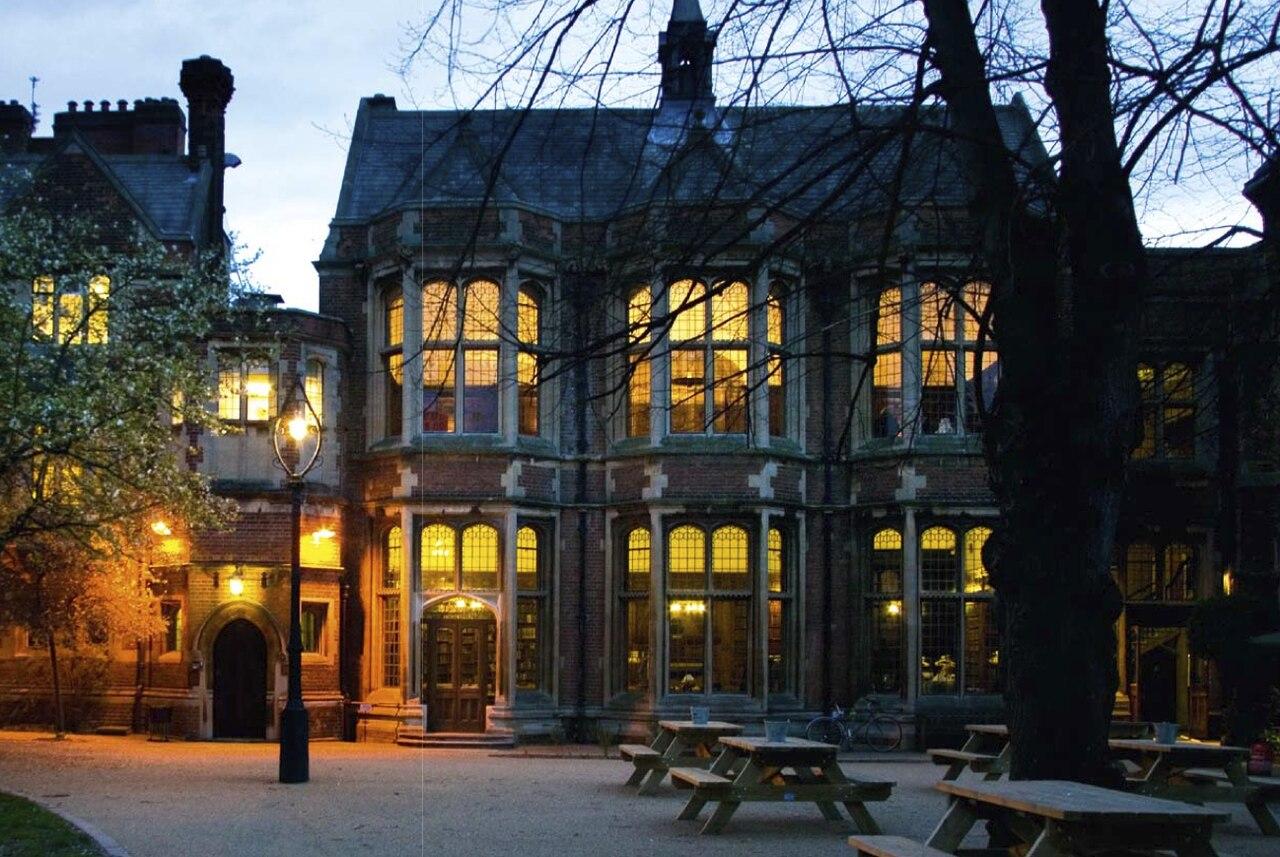
Around one in ten votes in the Oxford Union’s Trinity term election were cast by people pretending to be someone else, according to reports by the Union’s Election Tribunal.
The reports describe an organised scheme involving both members and non-members, fake membership cards, voters changing their appearance to vote again, and an impostor handing out ballots from behind the poll clerks’ desk. The scheme appears to have been built around a single candidate. The Tribunal found that, without its intervention, he “would have been elected first on Standing Committee”, the Union’s governing body.
It is the second impersonation case in two terms. In Hilary, the Union’s President-elect was removed after a separate Tribunal found she had handed out other members’ membership cards for voting. The Trinity reports now show that the group behind June’s scheme was also at work in that election. It is not clear when the practice began, or how many earlier elections were affected.
A dozen people have since been punished. Two members were expelled and ten non-members were banned from the Union for life. On 2 September, the Union’s Appellate Board froze every appeal, ordered that the reports not be accessed or shared without its permission, and noted that the Union is “communicating with police forces” about the matters the Tribunal investigated.
The Tribunal’s reports name those it found guilty. Overheard at Oxford has chosen not to name them while their appeals are suspended and the police position is unclear.
What happened on polling day
The election took place on Friday 12 June. That evening, the Returning Officer suspended the count, announcing “a systematic attempt to undermine the results of this Election” and that “a number of membership cards have been seized”, as Cherwell reported at the time.
The Tribunal’s final report sets out some of what officials saw. One voter presented a membership card bearing their own face but the name of a former member of Standing Committee. When the poll clerk remarked on the coincidence, the voter became “very defensive and hostile”, and the card was confiscated. It later failed an electronic check that genuine cards passed. Another person tried to vote with a real membership card that its owner had lost earlier that day. Two members arrived to vote and found their names already crossed off.
According to witness statements from electoral officials, the night only grew stranger. The Returning Officer chased one would-be voter out into St Michael’s Street to photograph him. After the poll closed, a former Union President found a man crouching out of sight in a toilet cubicle, who pushed him aside and fled the building. One official then overheard talk that people were being stationed around Oxford to watch the Returning Officer’s route home, and he was accompanied when he left.
The Election Tribunal
An Election Tribunal is a panel of three Union alumni members, chosen from a shortlist approved by Standing Committee, that investigates allegations of electoral malpractice and can punish those it finds guilty. The Union’s rules ask that at least one member be a qualified lawyer. This one was made up of three former Returning Officers, one of them a practising solicitor.
The rules give a Tribunal 384 hours, or 16 days, from the close of poll to deliver its report. This one sat for more than ten weeks. It cited “numerous criminal allegations”, “extremely serious welfare and safeguarding concerns”, hours of CCTV reviewed by volunteers over the vacation, and one panel member being hospitalised after an accident. The case files seen by Overheard at Oxford include 18 witness statements, ten of them from electoral officials.
Its final public report, published on 16 July, examined all 1,073 ballots cast. It ruled 117 of them ineligible: 110 beyond reasonable doubt and seven on the balance of probabilities. Five of those were excluded on technicalities rather than for fraud, such as joining fewer than three days before the poll. That leaves 112 ballots, or 10.4% of the total, which the Tribunal found were cast by people impersonating members.
The Tribunal’s ballot-by-ballot table attributes 108 of the excluded ballots to 16 repeat voters, each given a code name. Two of them are recorded as voting 11 times each.
It is not clear whether 112 is the full extent of the fraud. One complainant argued that the figure was “a floor, not a measure”, and that the election should be re-run. The Tribunal disagreed. It said it could not rule out that some ineligible ballots had been counted, but did not believe this to be “a greater risk than in a typical election”. The count went ahead on 26 July without the excluded ballots.
At the time, a Union spokesperson told Cherwell that the irregular ballots had been identified through a process that included “direct confirmation with every voter concerned”. The Tribunal’s own report says otherwise. It decided not to email the members in whose names the 110 ballots were cast, judging it “futile” because it was already sure they had not cast them.
The impostor at the ballot desk
One poll clerk, referred to in the reports as “Poll Clerk S”, issued 153 ballots on polling day, around one in seven of the total. According to an Overheard at Oxford analysis of the Tribunal’s ballot table, 38 of those, or one in four, were later excluded. At every other desk combined, the rate was 8.6%. The Tribunal found the gap “highly statistically significant”, concluding that impostors deliberately queued at her desk and that she helped them obtain their ballots.
Poll Clerk S was not who she said she was. She had introduced herself as a member who had worked as a poll clerk the previous term, and who was reappointed by the Returning Officer by email two days before the poll. The Union’s rules require such appointments to be posted on the noticeboard, so that candidates can object. This one never was, and nobody checked her identity on the day. The Tribunal called this “a regrettable lapse (to put it mildly)”.
At first, the Tribunal believed Poll Clerk S was the member whose name she had used. It found that member guilty in her absence on 13 July, after she missed a summons to give evidence. Minutes after the deadline to respond, the member replied that she had been impersonated. After a virtual hearing, the Tribunal accepted that she was not the woman at the desk, and dropped every charge relating to polling day.
The real identity of Poll Clerk S was traced through a chance encounter. Three members told the Tribunal that, a couple of days before the poll, they had met a group of non-members in the bar of the Randolph Hotel after a Union speaker event, including a woman who gave a different first name from the one Poll Clerk S had used. The Tribunal then ran a photo identification exercise using more than 50 faces. Seven witnesses picked out the same woman.
The Tribunal found that she was a non-member who had impersonated the member to get into the poll room, and banned her from the Union for life. She later told the Tribunal that she denied the allegations, and that a LinkedIn message was not proper notice of the case against her. The Tribunal noted that her LinkedIn profile had been edited the afternoon after that message was sent.
The member whose name was used did not escape. On 20 August, the Tribunal found her guilty of conspiracy, finding, among other things, that she had allowed her membership to be used, and expelled her. She told the Tribunal that her phone had been taken from her under duress on 9 June and that she had reported its theft to the police. The Tribunal rejected this defence for lack of detail. Her solicitors challenged the Tribunal’s jurisdiction and the validity of its make-up, but the Tribunal declined to engage with those points, saying the time to raise them had passed.
The conspiracy
The Tribunal found that the scheme was “organised and planned through a conspiracy of certain members and non-members”.
The central evidence was a public GitHub repository belonging to the candidate at the centre of the case, which the Tribunal said summarised the group’s private chats. When the Tribunal told him and others on 6 August that it had found the repository, it was deleted within the hour. According to the Tribunal, he had used the same methods in Hilary term, when he stood unsuccessfully for Standing Committee, and intended to use a seat as a platform for a run at the presidency. This time he received fewer than 30 genuine first-preference votes.
The Tribunal found him guilty of conspiracy and of lying to it, describing his defence as “a palimpsest of lies built upon lies”, and expelled him.
Nine further non-members were found guilty of voting while impersonating members. The Tribunal identified them by matching CCTV stills from polling day with photos on LinkedIn, Instagram and TikTok, and contacted them through social media. Eight never replied. All nine were banned for life. The Tribunal said those involved knew each other through an external social group, but stressed that it was making no finding against the group itself.
Two terms running
The Tribunal did not play down what this means. In one report, it wrote that “the Union’s elections were compromised two terms running”, adding: “we are not hiding from this fact”.
In Hilary term, a separate Election Tribunal found the winner of the presidential election guilty of handing membership cards to people not entitled to vote and telling them to cast ballots in other members’ names, as Cherwell reported. She was removed as President-elect and the election was re-run on 11 May. She rejected the findings.
That Tribunal could prove that two members had been impersonated, although witnesses suggested a wider scheme. It concluded that it would take “a scheme of industrial scale” to account for the winning margin of some 302 votes, and that there was no evidence of one. The election was re-run because the winner had been disqualified, not because the fraud was found to have changed the result.
The Trinity reports show that a second operation was running in the same poll. According to the Tribunal, the candidate at the centre of June’s scheme and a group of associates, many of whom were involved again in Trinity, ran an interference operation across Hilary term, using fake membership cards and changes of appearance to let non-members vote several times. He still fell short of a seat, “even with an illicit operation”. The operation came to light through the GitHub repository found during the Trinity investigation, and the reports do not say how many ballots it cast.
The Tribunal also said the repository contained references to “previous attempts to interfere in Oxford Union elections”, but its reports do not say which elections, or how far back they go.
How far back this goes, how many earlier elections were affected, and whether any of their results would have been different, is not known. It may now be hard to find out. The Returning Officer told the Tribunal that the ledgers used to check voters at earlier elections had, to the best of his knowledge, been destroyed. By the Tribunal’s own account, the checks it applied to June’s ballots went further than at “any previous in person Union election”.
Fraud has upended a Union election before. In 2020, when voting took place online, a Tribunal found that 507 votes in the presidential election had been cast using stolen voter codes, as Cherwell reported at the time.
Frozen appeals and the police
Under the Union’s rules, an expulsion only takes effect once the disciplinary process has ended and any appeal has failed. Until then, both expelled members are suspended.
That process has now stalled. The Appellate Board’s order of 2 September suspended all appeal proceedings “until further order”. It also suspended the Tribunal’s direction to circulate the names and photos of the banned non-members to Union staff, ordered that the reports not be accessed or distributed without its permission, and had all related material removed from the Union noticeboard.
The same order notes that the Union is “communicating with police forces regarding matters arising from and in connection with” the Tribunal’s work. One of the Tribunal’s reports had already warned anyone “considering reporting this wider” that “there may subsequently be investigations into these matters by the police”.
Thames Valley Police, whose area covers Oxford, told Overheard at Oxford that it could not find any reports on its system based on the information provided. It is not known which police forces the Union has been in contact with.
The result
When the count was finally held on 26 July, 44 days after the poll, Milo Donovan was declared the winner of the presidential election, with 435 first-preference votes to 360 for his nearest rival, as The Oxford Student reported. He is due to serve as President in Hilary term 2027. The Tribunal made no finding against any candidate in the presidential race, and the Union said at the time that the excluded ballots had “no bearing on the result”.
With appeals suspended indefinitely, it is not clear whether the July results are final.
The next election
The next Union election takes place on 27 November. The Tribunal promised that its findings would lead to “additional safeguards” for that poll. It also said it had “a range of serious concerns about the culture and operations” of the Union that “need urgent attention”.
But the Tribunal ceased to exist after its last report, on 20 August. It said its members would make their recommendations as individuals, and that “it will be up to the Society as to what it chooses to do with those”. It is not publicly known what, if anything, has changed.
Overheard at Oxford contacted the Oxford Union and Thames Valley Police for comment. The response from Thames Valley Police is included above. The Union did not respond by the time of publication.
Spotted a mistake, or want to respond? Email hello@overheardatoxford.com. Here’s how we handle corrections and complaints.